
Many brands approach branding, design and UX/UI separately.
In many cases, different teams, different agencies and different perspectives are involved.
On paper, it seems logical.
In practice, it usually leads to the same result:
Each element may be good on its own, but when combined, something feels missing.
The problem is often not that the design is bad.
The problem is that these three areas are not telling the same story.
When Brand Language Says One Thing and Design Says Another
Branding defines who a brand is and how it positions itself.
Design is the visual expression of that identity.
But when these two are not considered together, this happens:
The brand language is bold, but the design remains timid.
Or the design is very strong, but the brand cannot clearly communicate what it wants to say.
At this point, the user sees the brand but cannot truly recognize it.
They may remember it, but they cannot distinguish it.
In strong brands, however, a user should immediately recognize the brand when they see a design, a typeface, or even a single color.
The brand should evoke the same emotion and the same feeling at every touchpoint.
When this consistency is not achieved, the brand becomes visible but leaves no mark.
When branding and design move separately, the brand’s character becomes blurred.
When UX/UI Is Something “Added” at the End
In many projects, UX/UI enters the process at this stage:
“The design is ready, now let’s make it usable.”
But UX/UI is not just about organizing an interface.
It is about designing the relationship the user builds with the brand.
When it is not considered together with branding and design, UX/UI turns into this: The user can navigate the website comfortably, but does not form a connection with the brand. The experience is smooth, but soulless.
The most dangerous aspect of these disconnects is this:
The user usually cannot define the problem.
They do not say, “The site is bad.”
They do not say, “The design doesn’t work.”
They simply feel this:
“This brand didn’t really say much to me.
It didn’t make me feel anything different.
I don’t really need to buy this or use it.”
And they leave quietly.
When branding, design and UX/UI are not handled together, the loss usually happens here.
Silent, difficult to measure, but very expensive.
So What Changes When They Are Handled Together?
When these three areas start being considered around the same table, the brand language becomes clearer.
Design supports that language.
UX/UI delivers that story to the user in the right order and in the right tone.
The result is this:
The brand does not just look good.
It becomes understandable, distinguishable and memorable.
And this is not accidental.
It is a system.
A Short Agency Reality
As a creative agency, we can clearly say this:
Handling branding, design and UX/UI as separate “services” is easy.
Handling them together is difficult.
Because this requires thinking more than producing.
And often, the real difference that truly moves a brand forward is created here.
When branding, design and UX/UI are not handled together, the problem does not explode in one single place.
But it is felt in small ways at every touchpoint of the brand.
Today, strong brands do not treat these areas as separate parts,
but as different expressions of the same story.
Because users do not experience brands in fragments. They feel them as a whole.
Red Team
2th of Apr, 2026
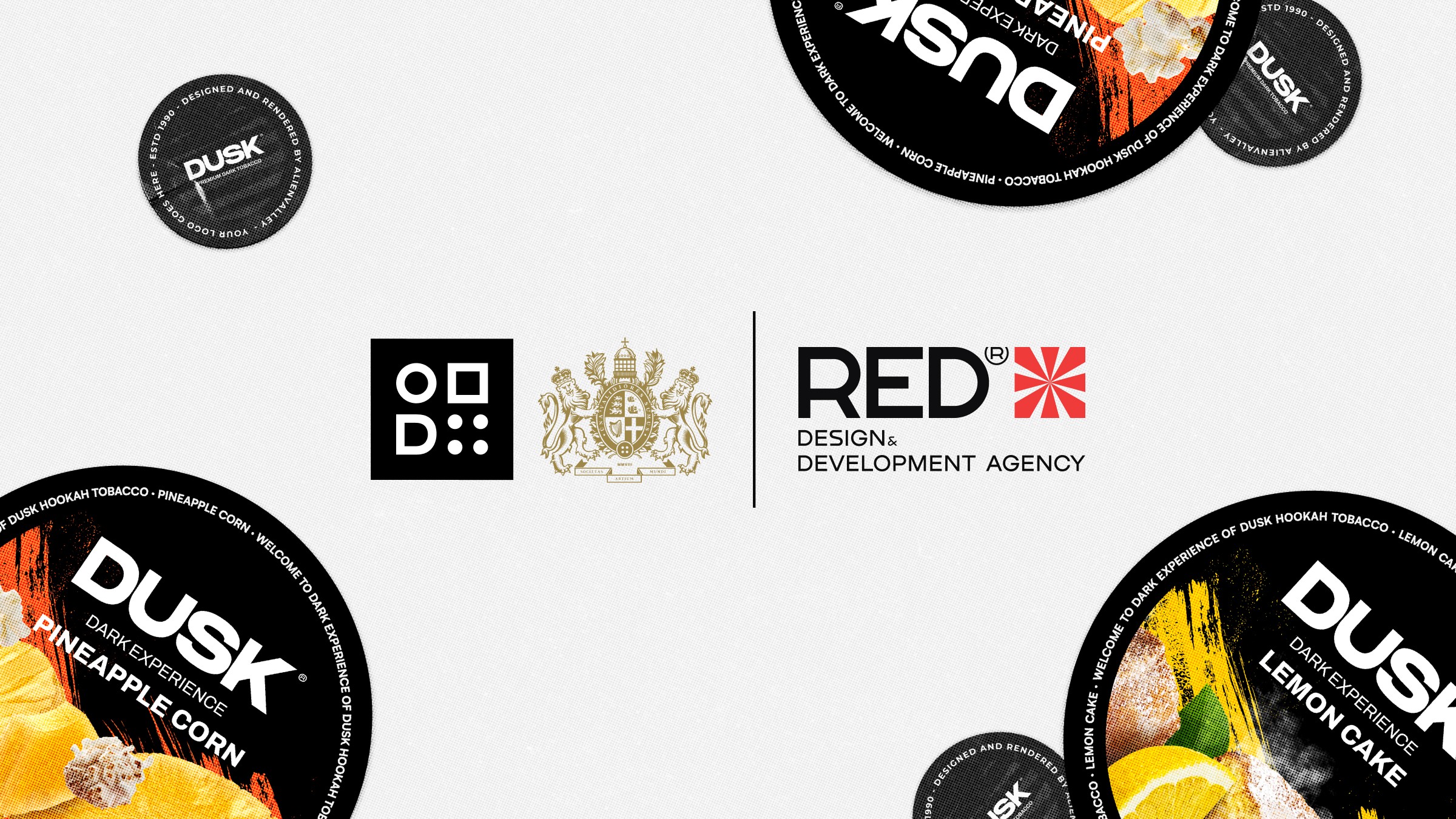
DUSK, a brand we built from scratch, is now live on World Brand Design Society